
À qui s’adressent les colorations ton sur ton ?
La coloration ton sur ton est idéale pour masquer vos premiers cheveux blancs de manière très naturelle ou si vous souhaitez intensifier ou nuancer votre couleur naturelle.
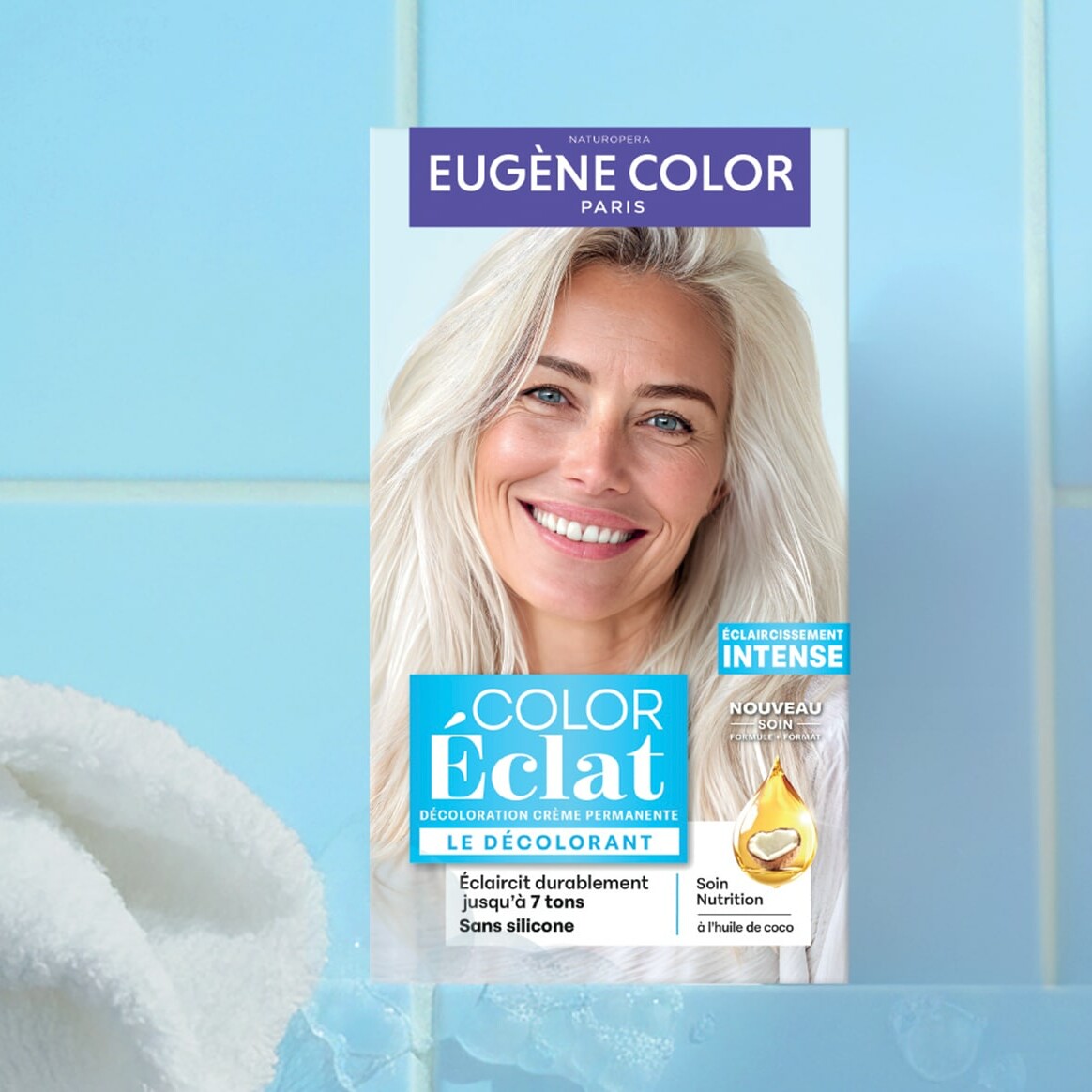
Si, au contraire, vous avez beaucoup de cheveux blancs et que vous souhaitez les masquer durablement il serait alors plus adapté de vous tourner vers une coloration permanente. De même, si vous souhaitez changer de tête et éclaircir votre couleur naturelle il est conseillé de choisir une coloration permanente ou même une décoloration, également disponible chez Eugène Color (ici) ou vous rendre directement chez votre coiffeur coloriste (ici).
Quelle différence entre une coloration permanente et une coloration ton sur ton ?
Il est important de rappeler que ces deux types de coloration ont le même mode d’action, c’est-à-dire qu’il s’agit dans les deux cas d’une coloration d’oxydation comprenant une crème colorante mélangée à un oxydant.
Communément, la coloration ton sur ton est formulée sans ammoniaque, contrairement à la coloration d’oxydation classique, ce qui constitue une différence majeure entre ces deux types de coloration.
La seconde différence significative entre la coloration permanente et la coloration ton sur ton est la tenue sur le cheveu. En effet, comme son nom l’indique, la coloration permanente est définitive et il faudra attendre la repousse de vos cheveux pour retrouver votre couleur naturelle ou passer par une nouvelle coloration. À l’inverse, la coloration ton sur ton ne dure que quelques semaines – entre 6 à 8 semaines en général – et s’estompe de manière progressive.
Quels sont les atouts et les inconvénients d’une coloration ton sur ton ?
La coloration ton sur ton présente divers avantages :
- Elle permet d’apporter de beaux reflets et de la nuance à votre chevelure.
- Comme évoqué, elle permet de masquer les premiers cheveux blancs.
- Elle est moins engageante qu’une coloration permanente puisqu’elle s’estompe progressivement sur 6 à 8 semaines.
- Il n’y a pas ou très peu d’effet racine lorsqu’elle s’estompe, elle nécessite donc beaucoup moins d’entretien qu’une coloration permanente.
- Enfin, lorsqu’elle est utilisée avec un soin post-coloration adapté comme celui développé par l’équipe R&D Eugène Color dans les kits Color&Glow, elle garantit une brillance intense de votre chevelure.
Rappelons toutefois que la coloration ton sur ton n’éclaircira pas votre chevelure au-delà d’un ton, ce qui n’est pas suffisant si vous souhaitez passer du brun au blond.
Comment utiliser une coloration ton sur ton ?
La coloration ton sur ton est une technique utilisée en salon de coiffure mais elle est également réalisable à la maison grâce notamment aux kits de coloration disponibles sur le marché. Privilégiez les kits complets comprenant à minima des gants et un soin post-coloration qui facilitera le démêlage et apportera de la brillance à votre couleur.
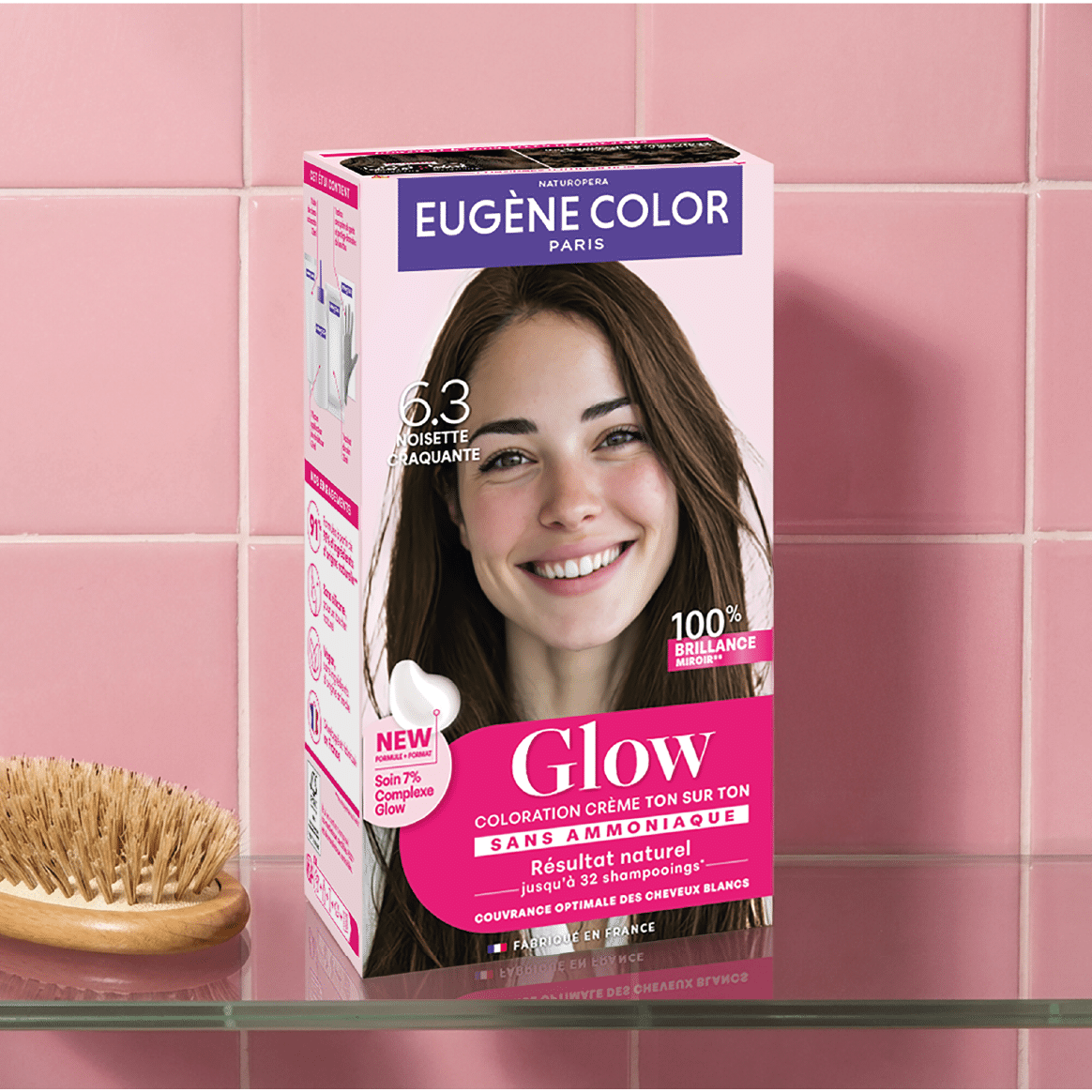
Une coloration ton sur ton à domicile est très simple et plutôt rapide. Les kits de coloration Color&Glow (ici) sont idéals si vous disposez d’une trentaine de minutes pour prendre soin de vous et sublimer vos reflets. Formulée sans ammoniaque, notre crème colorante aux notes fruitées et florales intensifie votre nuance naturelle ou apporte de nouveaux reflets à votre chevelure. Après votre coloration, n’oubliez pas d’appliquer le soin au lait d’amande douce, développé par notre laboratoire pour renforcer et nourrir vos cheveux tout en leur apportant une brillance intense.
Articles similaires
Découvrez comment réaliser sa couleur !
Kits de coloration Eugène Color Toutes nos colorations s’appliquent sur cheveux secs et non lavés.…